FM-1 Chimera Vocal
A port of CHIMERA to the M-VAVE FM-1. CHIMERA is a physical-modelling voice synthesizer by Jameson Hodge, released under the MIT licence: lungs, vocal folds, throat, mouth and nose, simulated. How the voice works is his. This firmware only adapts it to the FM-1. It's built on fm1-base by Charles Vestal and felucca-bsp by Leo Kuroshita, Hügelton Instruments.
This is version 0.9.0 of FM-1 Chimera Vocal. The FM-1 sings words: each key sings the next syllable of a line, at the key's pitch, and PLAY speaks the line. ALGORITHM chooses CHIMERA's male, female or child body, each with its own airway and its own vowels. The screen is CHIMERA's flat view, the head moving as it sings. Every sound comes from the simulated airway, not from samples. It sings whole lines by itself on CHIMERA's tunes (ENV). The same mouth beatboxes (SEQ: CHIMERA's ten drum sounds, its beats and a step sequencer), and LFO swaps it for a seal's, a songbird's, an alligator's or an elephant's, from CHIMERA's Bestiary.
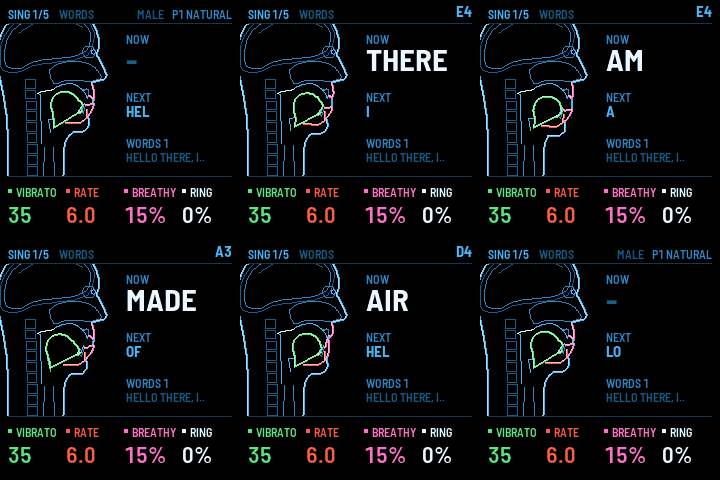
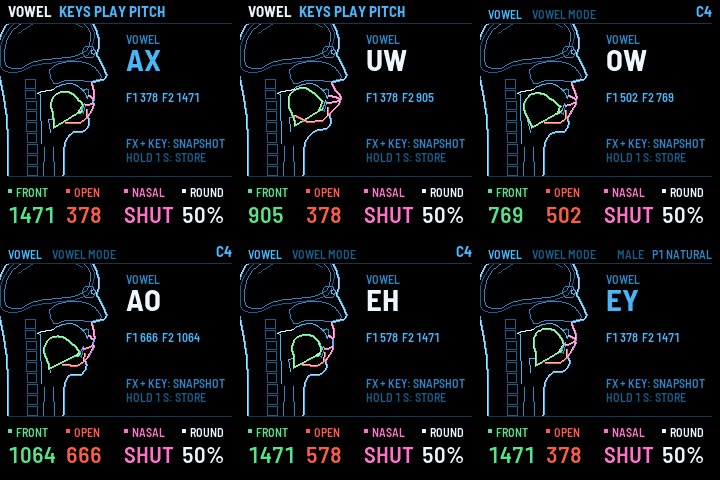
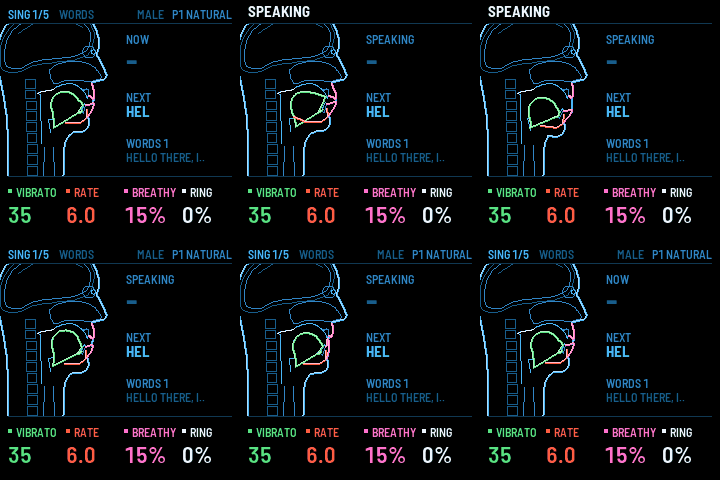
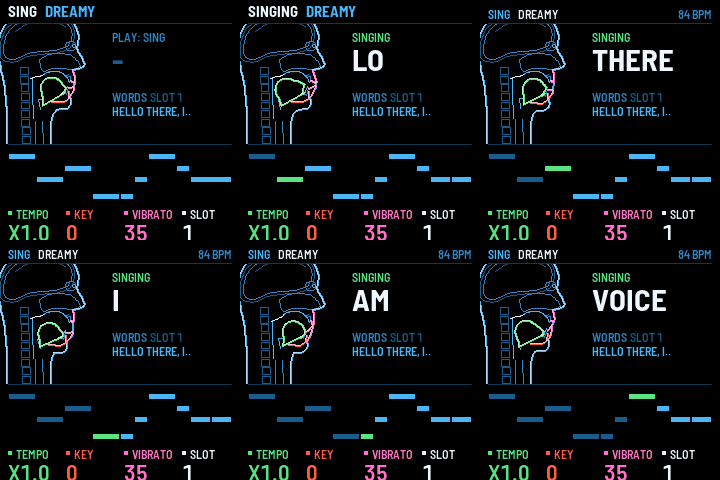
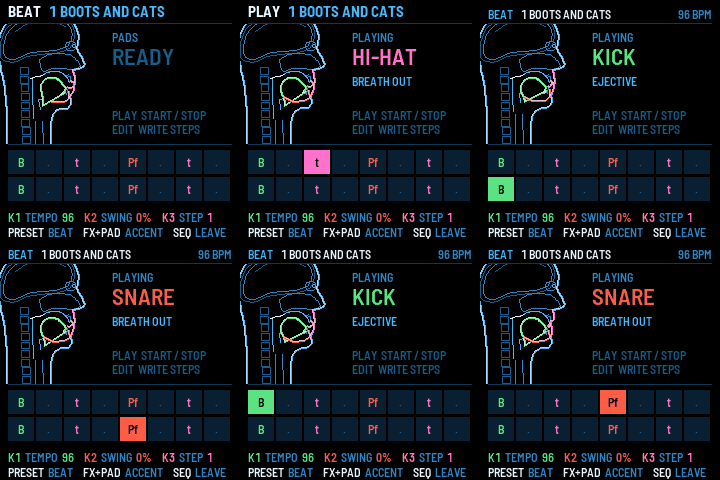
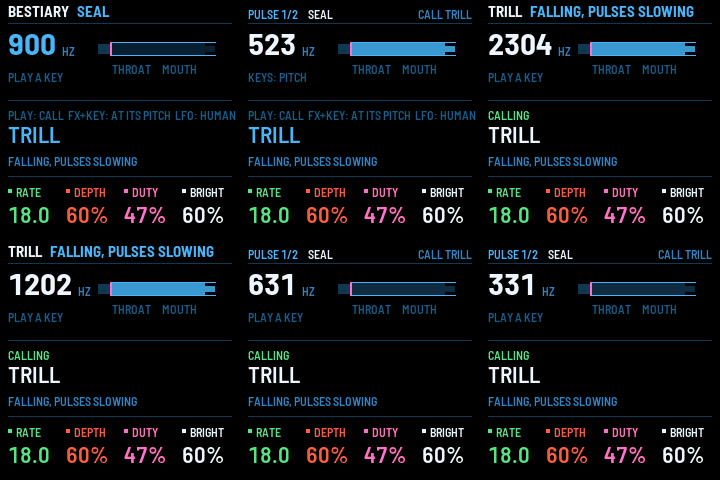
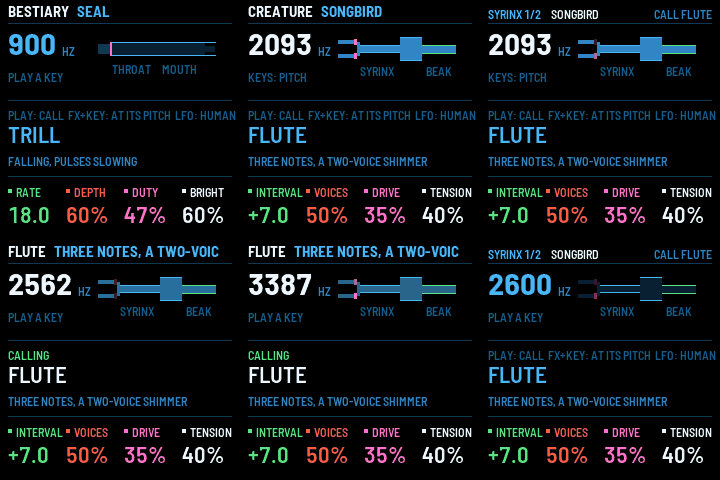
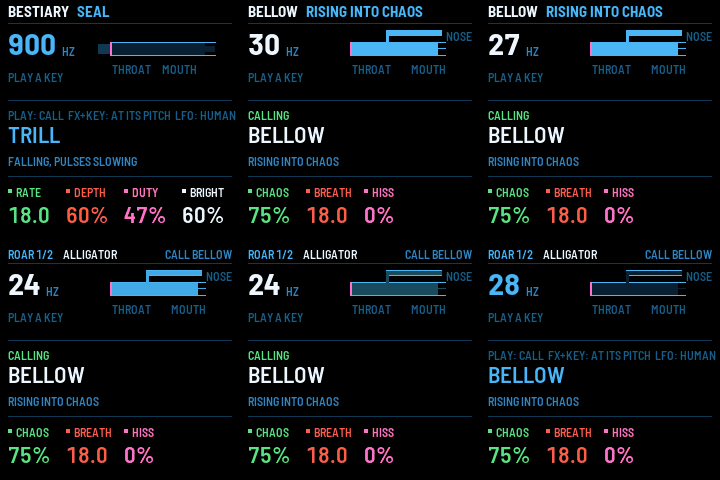
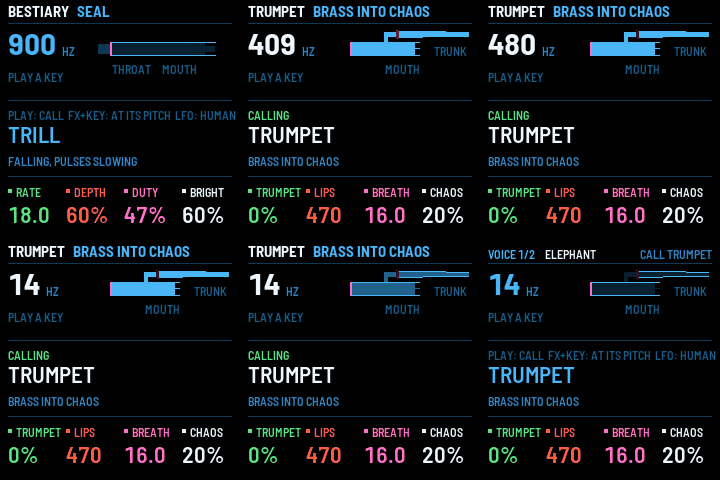
The voice uses both of the FM-1's processor cores: the second core simulates the sound waves in the throat, mouth and nose and the vocal folds, every sample; the first runs CHIMERA's control (the tongue, jaw and lips moving along the words' gestures, and the anatomy that turns them into the tract's shape) and the screen. CHIMERA's full airflow simulation is about twice what the FM-1 can run, so the tract is a lighter waveguide driven by CHIMERA's anatomy, vocal folds and noise sources.
You install it at your own risk, and the installer can put M-VAVE's own firmware back.
It works with both FM-1 flash chips, the older Puya P25Q80 (0x856014) and the newer UC25HQ80 (0xB36014): the same fix as Felucca's (#320) and SLOOP's, here from fm1-base (Laurens, PR #35). Not yet tested with this firmware on a newer unit.
- The Studio prepares the words the FM-1 sings, with the CMU Pronouncing Dictionary, lets you try them on an emulated FM-1 in the browser, and sends them to yours over USB. You can also type them on the FM-1 itself: EDIT opens the word editor, a letter a key.
- Install it from Chrome or Edge, with the FM-1 connected by USB.
- The Manual explains the keys, the knobs and the screen.
- The Source: the voice's port is MIT (CHIMERA's licence), the firmware's platform MPL-2.0 (fm1-base's).
These pages count visits with GoatCounter: no cookies, no personal data.
Unofficial: not affiliated with or endorsed by M-VAVE, Jameson Hodge or fm1-base's authors. M-VAVE and FM-1 are trademarks of their owners.